The desert air settles into walls with a quiet resolve, and the bathroom in a sunbaked Arizona home has a way of revealing what it truly needs. The space you choose to consider as a retreat becomes a stage for light, texture, and color to play against the memory of heat, dust, and the way water reflects the sky after a monsoon. When you embark on bathroom remodeling in the Southwest, tile patterns and inlays stop being mere decoration and become practical tools for managing moisture, glare, and the way a room feels from morning to dusk. The right choices can soften heat, visually expand a compact footprint, and honor the landscape without straying into cliché. I have spent years helping homeowners in Arizona navigate this terrain, and the conversations that emerge around tile patterns and inlays are often the ones that determine whether a remodel feels like a clever update or a thoughtful rebuild.
Arizona bathrooms sit at an interesting crossroads of function and mood. We contend with high humidity during monsoon season, dry, boiling afternoons, and the possibility of dramatic sunlight that streams through windows and mirrors with a glare that can feel almost theatrical. A tile pattern is not simply a style choice; it is a design decision with practical consequences. It influences how the eye travels through the room, how the floor handles moisture and slowing water from a shower, and how the space ages visually as colors fade or shift with sun exposure. Inlays, meanwhile, offer the chance to tell a story without overpowering the room. They can anchor a design, create a moment of delight, or provide a subtle nod to the local material palette—terracotta, warm neutrals, and the mineral tones that echo the desert’s geology.
The first thing to acknowledge is that Arizona bathrooms often demand a balance between cool and warm. The air conditioner hums, the windows frame a landscape that changes hour by hour, and the tile you choose will impact how those cues are perceived. A radiant white or very light porcelain floor may feel pristine and cooling, but it can also show every speck of dust and every water spot if a family member leaves a shower door open or if the sprinkler outside sends a fine mist onto the patio and into the doorway. Darker tiles absorb heat and often soften glare, but in a tight space they can shrink the perceived volume. The trick is to find a pairing of pattern and inlay that aligns with the room’s size, lighting, and the way you move through it during a typical morning routine.
A practical starting point is the size and layout of the bathroom. In Arizona, many bathrooms sit adjacent to patios or exterior walls that catch afternoon sun. If you have a small bathroom with a single window, a bold floor pattern can help expand the sense of space. If you’re remodeling a larger bath that receives abundant north-facing light, a more restrained palette with an intricate border can add depth without feeling busier than the room can handle. Pattern brings rhythm to a space. It tells a story about how people use the room and how they feel in it. Inlays begin a quieter, more intricate conversation, guiding the eye to details that might otherwise go unnoticed in a room that needs both practicality and personality.
Before you decide on any specific pattern, know the room’s traffic flow. In a master bathroom, you may have a longer vanity run and a shower enclosure that sit side by side. In a hall bath, the tile must endure more rough traffic and daily wear. The floor is where durability and maintenance almost always demand a realistic approach. Inlays can be placed where the eye lands first—leading from the doorway to the vanity, or framing a shower niche or bench. Patterns can be used to stretch a narrow footprint or to break up a long wall with a visual step that changes the pace of the room.
A common misstep is to chase a trend with too much confidence in the moment. In the desert climate, certain patterns that look striking in a showroom can turn into maintenance headaches at home. A high-contrast floor may look dramatic, but it can show every crumb and every drop of water. A busy mosaic on the shower wall can be stunning at first, but if the grout is light it will require frequent cleaning and sealing. It is entirely possible to combine drama with practicality, but the approach must be grounded in daily life. My advice comes from watching homeowners learn to live with and love their new spaces over the course of seasons, not weeks.
Understanding tile patterns means understanding the geometry of the room. In a rectangular bath, a diagonal tile layout can create the illusion of movement and space. If the ceiling is high, you can emphasize that height with a vertical pattern on a feature wall or a narrow shelf, then keep the floor calm to avoid a cluttered feel. A herringbone pattern can add sophistication without overwhelming a medium-sized bathroom. A grid layout tends to be the most forgiving for maintenance and alignment, especially if your project involves a mix of tile sizes. In a sunlit room, even a lighter color in a subtle pattern can feel more expansive because the light travels across the floor and reflects back into the space.
Color, too, matters. Arizona’s light changes with the seasons and even within a single day. In a bathroom remodel, you might consider a color story that mirrors the desert: warm neutrals like sand, limestone, and bone, punctuated by accents of charcoal or smoked blue granite. Neutral tones tend to show less soil and water marks and stay looking fresh longer. They also pair well with natural textures—wood vanities, matte metal fixtures, and glass—that reduce glare and create a calm, spa-like feel. If you decide to introduce color, do it with discretion. A single accent tile in a shower niche or a narrow border around the room can give a sense of personality without dominating the space or requiring a whole new set of cleaning routines.
Inlays offer a different kind of depth. They can be very subtle or dramatically personalized, depending on the choice of material and the precision of the installation. A quartzite border in a shower or a band of mother-of-pearl inlay around a vanity mirror can catch the light in the morning and create a moment of quiet luxury in a space that often doubles as a daily workroom. Inlays can be used to tie the bathroom’s design to other parts of the home. If you have a tile floor in the foyer or a stone accent on the exterior walls, you can echo those textures in the bathroom to create a sense of continuity without forcing uniformity. The most successful inlays in a desert home tend to be those that add a tactile note rather than a loud color punch.
When it comes to installing patterns and inlays, the practicalities deserve attention. Arizona homes can have variable substrate conditions. Some bathrooms rest on slab foundations, while others sit atop older structures with more movement or differential settlement. The tile installer you choose should be comfortable with long, straight runs and the nuance of aligning patterns across a threshold and a doorway. The adhesive and grout choices matter. If you’re in a climate that swings between humidity and dryness, you will want a grout with a sealant that resists cracking and staining. Epoxy grouts are excellent for showers and wet areas where maintenance is a concern, but they require a more exacting installation technique. Cementitious grouts with stain-resistant sealers can also perform well in the right hands and with the right care regimen.
A practical story helps bring these ideas into focus. I once worked with a couple remodeling a mid-century home near Camelback Mountain. Their bathroom had original ceramic tile that looked charming but had become slick and difficult to clean. We selected a porcelain tile with a soft gray base and a subtle warm veining to echo the stone of the surrounding landscape. The floor utilized a large-format tile in a rectangular layout with a deliberate offset pattern that created a gentle rhythm without overwhelming the space. For the shower, we chose a linear drain with a narrow border in a slightly darker tone and inserted a narrow inlay of glass mosaic that caught the light just so when the morning sun hit the glass doors. The result was not just a fresh look but a space that felt grounded in the climate and memory of the home. It was practical, it looked refined, and it held up through the family’s daily routines for years.
If you are considering a pattern-first approach versus an inlay-first approach, you are dealing with a question of scale and storytelling. Patterns can set the stage, create flow, and guide the eye around the room. Inlays can punctuate moments that matter most—like the shower threshold, the vanity backsplash, or a bench in a large shower. The two approaches are not mutually exclusive. In fact, they complement each other when applied with restraint and intention. The key is to plan the sequence of encounters in the space. Where does the eye land first when you walk in? Where do you want it to linger? Where do you want to reduce glare or emphasize texture?
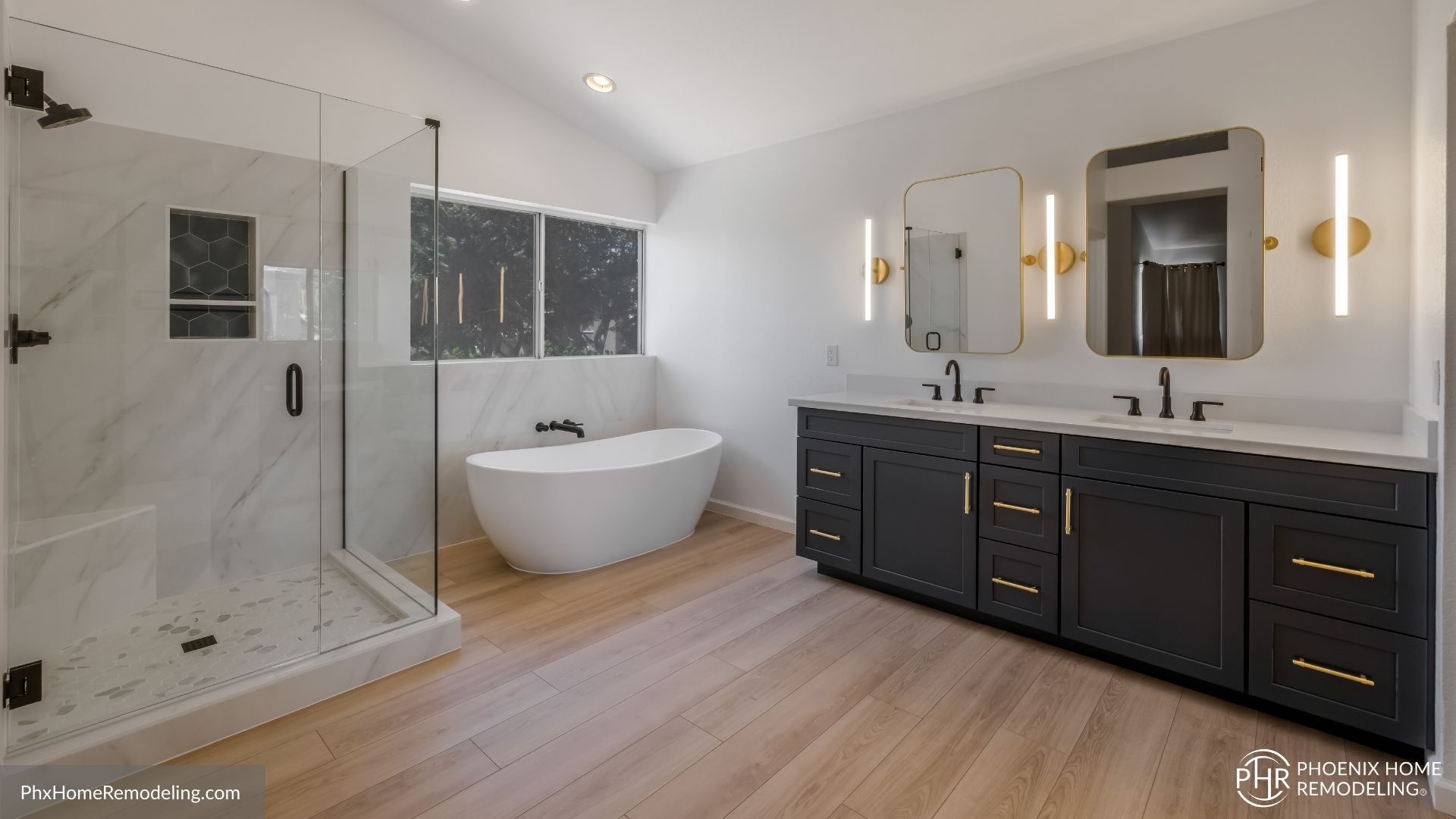
Let us consider a few concrete pathways you might explore, tailored to the Arizona climate and a broad range of budgets.
First, a restrained, elegant scheme for a smaller bathroom. This is where you lean into a light, cool palette and keep the pattern on the floor relatively simple. A large-format porcelain tile in a soft taupe or pale gray on the floor, laid in a straight grid that aligns with the longest wall, can visually widen the room. Add a slim dark border at the perimeter to anchor the space and give the floor a defined edge. For the shower, use the same tile in a vertical layout on the walls to extend the height and reduce the amount of grout visible. A small glass mosaic in a narrow strip at the shower niche will reflect light and provide a whisper of color without dominating the wall. Inlays can come in as a delicate band around the top of the vanity backsplash, perhaps a hint of brass or copper to pick up the metal fixtures. This approach keeps maintenance modest while delivering a refreshed aura that feels cool and calm in the hottest part of the day.
Second, a more dramatic, high-contrast design that still respects the desert environment. You can achieve this by pairing a lighter floor with a darker, coal-gray or charcoal-hued tile on the shower walls and around the bathtub if you have one. The floor can be a large porcelain tile in a beige or warm gray that disguises footprints and water marks. The shower wall in a solid, darker tile creates a focal https://sites.google.com/view/phoenixhomeremodeling/shower-remodeling-services/scottsdale-az/ point that anchors the space. Introduce a unique border or inlay along the edge of the shower bench or behind the vanity mirror to catch the eye as you enter the room. A linear drain in a brushed nickel finish aligns with the modern aesthetic, while a narrow inlay of glass tile along the niche provides a tiny gleam that makes the glass door feel more substantial. A note on maintenance: choose grout colors that don’t demand constant cleaning and consider sealers that are easy to reapply. This setup yields a spa-like atmosphere without requiring the entire room to be reimagined every few years.
Third, a year-round pattern that nods to outdoors. If your bathroom is adjacent to a patio or covered lanai, consider a seamless transition between indoor and outdoor spaces. A floor pattern that alternates large-format tiles with a secondary, smaller motif can mimic the way light falls across the desert floor at different times of day. A border that runs horizontally around the room can visually widen a narrow space, while a vertical accent on the shower wall adds a sense of height. The inlay can be a subtle motif that echoes a local stone or an abstract desert-inspired symbol, placed above the vanity or integrated into the threshold leading into the shower. The goal here is to keep the weathered, honest look of natural materials while maintaining the ease of cleaning and the durability you need for daily life.
Cost is a reality when you plan a tile-driven bathroom remodel in Arizona. You can expect material costs to range widely depending on the tile format, the pattern, and whether you opt for inlays or custom borders. A fair mid-range project might place material costs between $6 and $12 per square foot for porcelain, with installation costs adding a similar amount or more depending on complexity. If you choose natural stone or hand-cut inlays, the prices can rise significantly, sometimes by 50 percent or more for the same area. It is not unusual for the total cost of a bathroom remodel to fall anywhere from $12,000 to $28,000 for a standard-size room, but these figures shift with the size of the space, the level of customization, and the chosen finishes. The most important aspect is to build a plan that addresses both the aesthetic goals and the everyday realities of living in a warm climate. A well-drawn plan can prevent surprises during installation and give you a reliable framework for evaluating bids.
When selecting tiles, consider the ease of cleaning as part of the design. Some textures look beautiful but can trap grime or grout in places that are hard to reach. For walls that get splashed frequently, a smooth or lightly textured tile is more forgiving than a highly textured surface. Bathrooms with heavy use or children benefit from bigger tiles with fewer grout lines, which reduces the amount of maintenance required. Grout sealer becomes part of the maintenance routine, and it helps to keep grout color consistent. In a desert climate, grout can crack due to temperature fluctuations, so choosing a flexible grout and ensuring proper substrate preparation becomes critical. The installer should verify that the substrate is flat and stable and that the pattern has the correct allowances for expansion and contraction. A small misalignment early on can become a stubborn issue if patterns do not align at doorways or transitions.
Light plays a vital role in how tile reads in an Arizona bathroom. Natural light can make a pale floor feel airy and cool, but it can also reveal every speck of dust or any imperfection in the surface. Artificial lighting can be tailored to highlight an inlay or a pattern without producing glare on polished surfaces. A practical approach is to layer light sources—overhead recessed lighting for general illumination, task lighting by the vanity, and a softer glow near the tub or shower area to emphasize the pattern or inlay that you love. If you have windows that face the sun during high afternoon heat, consider a daylight-friendly approach: lighter floors with a reflective glaze on wall tiles can bounce light around the room, making the space feel larger and less oppressive during peak sun hours. On the other hand, if your bath lacks direct sun, a warmer palette with natural stone or a warm-toned glaze can keep the room from feeling sterile.
Inlays can be practical in other ways too. A small inlay near the sink can be a personal touch, a nod to family initials, or a nature motif that echoes the local landscape. A decorative strip along the shower surround can help visually separate the wet zone from the dry zone, guiding the eye and reducing the mental clutter that can accumulate in a busy morning routine. I have seen clients respond positively to inlays that celebrate a place, be it a stylized prickly pear or a silhouette of a saguaro. The key is to keep it simple enough to remain timeless. A single, well-chosen motif can anchor the room for years, while a busy inlay risks looking dated quickly.
The emotional resonance of tile in a bathroom remodel should not be underestimated. The right pattern or inlay can create a daily ritual that makes the space feel like a personal retreat rather than a utilitarian corner. In a climate where the sun and heat dominate much of the year, a bathroom that feels calm and anchored provides relief. When a room feels good to be in, it becomes the place you want to start and end your day in. The choices you make about patterns and inlays should support that feeling, not fight it. This is especially true when you are balancing family life, work, and the ritual of getting ready for the day or winding down at night. It is easy to over-design a space in a way that adds stress rather than ease. The best bathrooms in Arizona are those where the design feels inevitable in the moment you walk in, as if the space has always been there and you have simply learned to see it.
The right team matters. You want artisans who understand the chemistry of the space—the humidity, the heat, the slight movements in the substrate, and the daily rhythm of a family in and out of the room. A well-qualified installer will not only lay tile with precision but also understand how patterns align with doorways and transitions. They will know to check the substrate for flatness, apply the proper waterproofing measures, and ensure that grout and caulk remain durable over time. They will also be able to guide you through the small but meaningful decisions—whether to use a bright, reflective glaze to heighten the sense of light or to lean toward a matte finish that hides the inevitable smudges of daily life. The comfort you feel in your installed space is a direct reflection of the care you put into choosing the right professionals and the patience you invest in the process.
If you are still in the planning phase, here are a few practical steps that can help translate these ideas into a coherent design:
- Visit two or three tile showrooms and collect samples that you can place in the bathroom in natural light at different times of the day. This helps you see how the patterns and colors behave when they meet direct sun and indoor lighting. Create a mood board that pairs tile textures with hardware finishes and vanity materials. A cohesive story will emerge if you keep the board focused on a few core ideas—light and cool, warm and grounded, or bold and refined. Bring home a few mockups of patterns and borders to the space. Seeing how a diagonal layout interacts with the doorway and the vanity run is often more clarifying than a projection on a screen. Talk through maintenance expectations with your installer. Some choices look stunning but require more frequent cleaning or sealing. It helps to know what is involved before you commit.
Finally, remember that your home is not just a collection of rooms; it is a living system. The bathroom is not an isolated project but a part of how you move through daily life, how you prepare for the day, and how you unwind in the evening. Tile patterns and inlays in an Arizona bathroom remodel should serve a simple purpose: to make the space more usable, more beautiful, and more aligned with the rhythms of your life. You want a space that reflects your taste while remaining resilient in the face of heat, sun, and daily use. That balance is not a fantasy but a realizable outcome when you listen to the room, the light, and the way you live inside it.
For many homeowners, this is the moment when a bathroom remodel ceases to feel like a standalone project and begins to feel like a natural extension of the home’s story. The desert landscape has a way of teaching patience. The tiles you choose will settle into the room with a quiet confidence, and over time they will carry the memories of mornings that begin with a splash of cold water on a warm face, evenings spent winding down with a soft glow from the backlit mirror, and the small rituals that turn a bathroom into a sanctuary rather than a mere utility. If you take the time to consider patterns and inlays thoughtfully, you will not only enjoy a space that looks right in the moment but also one that continues to reward you with beauty, ease of maintenance, and a sense of belonging in a home whose walls have witnessed the seasons come and go.
Two concise notes about implementation that come up frequently in conversations with clients:
- Pattern direction matters. In a narrow bath, use a pattern that runs along the length of the room to give the illusion of breadth; in a square room, a central focal point on the floor can draw the eye toward the shower or the vanity and away from any perceived awkward angles. Inlays are anchors, not distractions. If you are unsure about a large inlay, start with a small, meaningful motif in a corner or along a niche. If you love it, you can always expand later. If a motif feels out of place, it can quickly become a visual interruption rather than a signature.
The right combination of tile patterns and inlays can transform a bathroom remodel in Arizona from a simple renovation into a space that resonates with the very climate that surrounds it. It can become a place that supports the rhythm of daily life, a sanctuary that invites slow mornings and quiet evenings, and a design that holds its value as the years pass. That is the goal I keep in mind when I speak with homeowners about bathroom remodeling in this sun-warmed region. The details matter, but more than anything, the approach matters. A thoughtful pattern, an intentional inlay, and a plan that honors both style and practicality can create a bathroom that ages gracefully, weathering heat and time with quiet grace.
Two lists to help you focus your initial decisions, should you wish to use them:
- Pattern ideas for small to mid-size rooms:
- Inlay ideas that add personality without overwhelming the space:
If you read this and feel a pang of recognition—the sense that a bathroom remodel could be both practical and deeply personal—you are in good company. The spaces we live in every day deserve the care of intention, not just the consequences of trends. The desert offers a grand stage for texture, light, and color, and tile patterns and inlays are the kinds of conversations that let a home answer back with quiet confidence. When you approach this work with patience, curiosity, and a steady eye for the daily routines that shape life here, you will end up with a bathroom that is not only beautiful but resilient and true to the place it calls home.